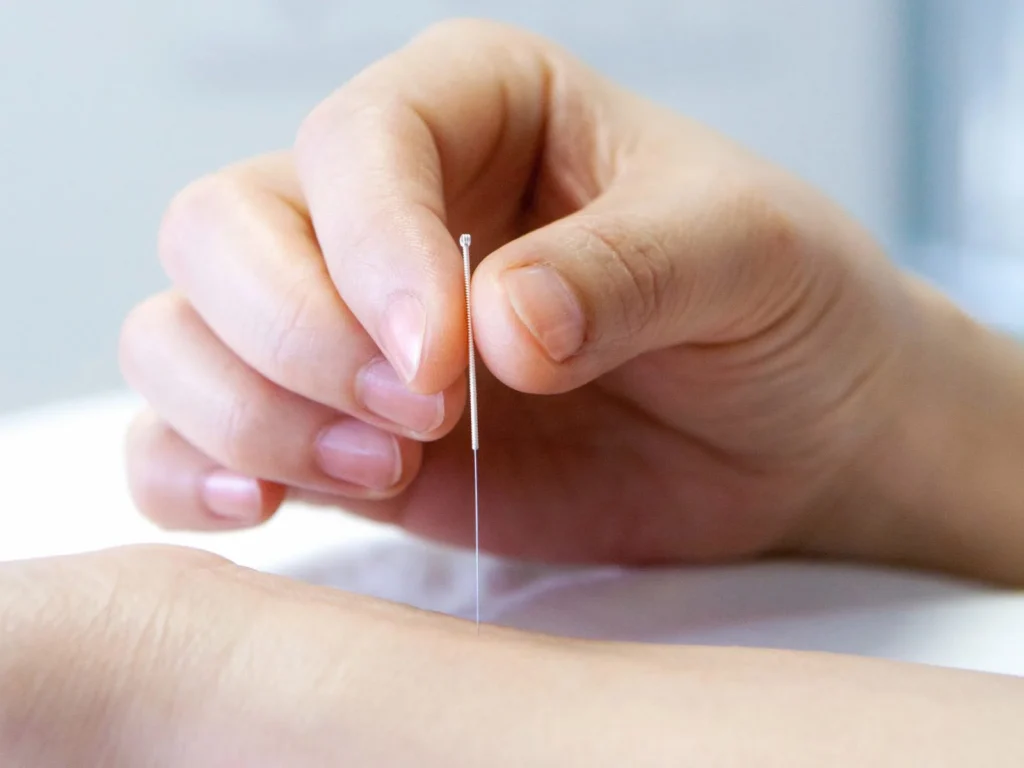
Acupuncture
What conditions does acupuncture treat?
Acupuncture can treat many types of health issues. Most often, people use it to relieve chronic (long-term) pain, such as:

Arthritis

Back pain, neck pain or muscle pain

Knee pain

Headaches and migraines

Menstrual cramps

Sports injuries

Cancer and cancer treatment side effects

Repetitive strain disorders and overuse syndrome

Irritable bowel syndrome

Immune system problems

Infertility

Menopause and hot flashes

Face pain and other nerve discomfort

Pregnancy discomforts
Why Acupuncture?
How does acupuncture work?
There are more than 400 acupuncture sites on the human body, and these points correlate to 12 primary energy meridians and 8 secondary energy meridians. These meridians enable a skilled practitioner to choose from a variety of acupuncture points, such as a local point, which is the actual site of the injury or discomfort, or a systemic point, which is a network of acupuncture points distributed throughout the body,
There are eastern and western opinions on how acupuncture works:
Perspectives:
Eastern: The yin and yang forces that make up the human body are in conflict. Through a number of meridians, these forces circulate throughout the body. Disease and pain are manifestations of forces out of balance or qi flow restriction. A TCM practitioner will first identify the underlying cause of the imbalance before inserting tiny needles into the proper acupuncture points along the proper meridians to restore free-flowing qi and cure the imbalance, thereby treating the patient’s ailment and pain at the same time.
Western: Acupuncture points are situated close to neural regions that stimulate the brain and spinal cord’s central nervous system to release hormones and neurotransmitters. In turn, these promote immunity, normalize hormonal systems, dull or block pain, and normalize bodily functionality for optimum health and wellbeing.